
A Violent Morning on Alloway Creek
In the early hours of March 21, 1778, a brutal surprise attack unfolded at the Hancock House in what is now Hancock’s Bridge, Salem County, New Jersey. The event, often called the Hancock’s Bridge Massacre, became one of the most shocking Revolutionary War incidents in South Jersey and helped fuel Patriot anger toward British forces in the region. (Wikipedia)
The Strategic Context: War Comes to Salem County
During the winter of 1777–1778, British forces occupied Philadelphia, the seat of the Continental Congress. From there, British commanders launched foraging expeditions into southern New Jersey to gather food and supplies for their army. Local Patriot militia in Salem and Cumberland counties attempted to block these incursions, especially along crossings of Alloway Creek, an important route into the agricultural interior. (Journal of the American Revolution)
Just days before the massacre, British troops under Lt. Col. Charles Mawhood clashed with New Jersey militia at the Battle of Quinton’s Bridge (March 18, 1778). After that engagement, Mawhood ordered a follow-up operation targeting militia positions nearby. (Wikipedia)
A Night March to Hancock’s Bridge
On the night of March 20, 1778, Mawhood sent Major John Graves Simcoe and roughly 300 soldiers of the Queen’s Rangers on a covert mission. Guided by local Loyalists, the troops traveled by boat down the Delaware River, landed near the mouth of Alloway Creek, and marched through marshland toward Hancock’s Bridge. (NJ.gov)
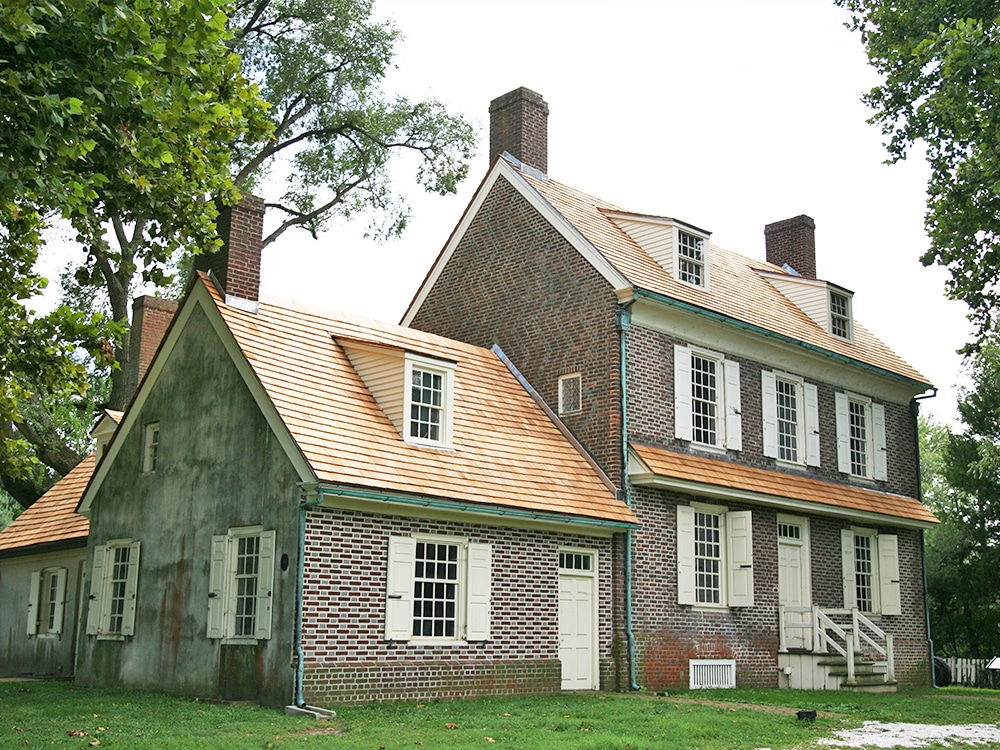
Their target was a group of Patriot militia stationed near the bridge and using the Hancock House, built in 1734, as lodging. The house belonged to Judge William Hancock, a prominent local figure who had allowed militia members to stay there while guarding the crossing. (NJ.gov)
The Attack
Around 5:00 a.m. on March 21, Simcoe’s troops surrounded the area and stormed the house. The militia inside were asleep and caught completely off guard. According to contemporary accounts, the British troops entered the building and killed the occupants with bayonets, reportedly without firing a shot. (NJ.gov)
Estimates of the casualties vary in historical sources.
- Some accounts report about 20 Patriot militiamen killed.
- Others list roughly 10 killed and several wounded, including Judge Hancock. (NJ.gov)
Judge Hancock himself was fatally wounded during the attack and died several days later. (NJ.gov)
Because the victims were largely unarmed and sleeping when the soldiers entered the house, Patriot writers and later historians referred to the event as a “massacre.” (Journal of the American Revolution)
Impact on the Region
News of the killings spread quickly through Salem County and the surrounding countryside. The violence intensified hostility toward British troops and Loyalist supporters in South Jersey. The attack also became part of a broader pattern of raids and counter-raids in the region during 1778, a period sometimes described by historians as the “Forage War.” (Journal of the American Revolution)
The Hancock House Today
The Hancock House, located in Lower Alloways Creek Township, still stands today as one of the best-preserved colonial structures in the region. Built in 1734, the brick home is listed on the National Register of Historic Places and is preserved by the State of New Jersey as a historic site. (Wikipedia)
Visitors can tour the house and learn about the events of March 1778, offering a tangible connection to one of South Jersey’s most dramatic Revolutionary War stories.
Sources
- New Jersey Department of Environmental Protection, Hancock House Historic Site (NJ.gov)
- Crossroads of the American Revolution, Hancock House (Crossroads of the American Revolution)
- Journal of the American Revolution, Operations of the Queen’s Rangers, Feb–Mar 1778 (Journal of the American Revolution)
- Wikipedia, Hancock House (Lower Alloways Creek Township, NJ) (Wikipedia)
- Wikipedia, Battle of Quinton’s Bridge (Wikipedia)
- Salem, New Jersey history summary (Revolutionary War context) (Wikipedia)