
Where Patriots Poured Their Plans: Taverns as Revolutionary Hubs in South Jersey
Long before Zoom calls and war rooms, colonial taverns were the heartbeat of political life—and in South Jersey, they became indispensable to the Patriot cause. These ordinary‑looking inns were anything but idle; they were meeting spots, planning rooms, militia hubs, and even sites of early government action.
Across the mid‑Atlantic colonies, taverns served a unique dual purpose. They offered food, drink, and lodging to travelers, but they also functioned as public forums where news spread, political ideas were debated, and alliances were formed. Historians sometimes liken them to “a physical internet,” linking distant communities through conversation and information exchange long before newspapers or reliable postal systems took hold. (National Park Service)
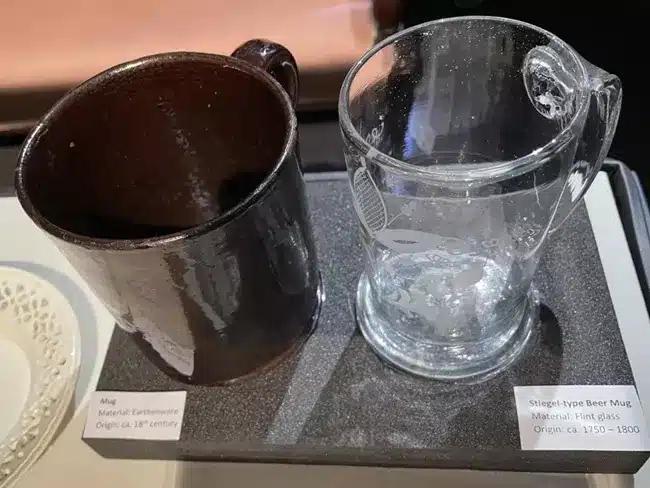
NPS
The Indian King Tavern: New Jersey’s Tavern That Became a Statehouse
No story about Revolutionary taverns in South Jersey is complete without the Indian King Tavern in Haddonfield. Built around 1750 and later expanded, this tavern quickly became more than a place for ale and rest. When British troop movements made it unsafe for the colonial government to meet in Trenton or Philadelphia in early 1777, the New Jersey Legislature relocated its sessions to this tavern. (American Battlefield Trust)
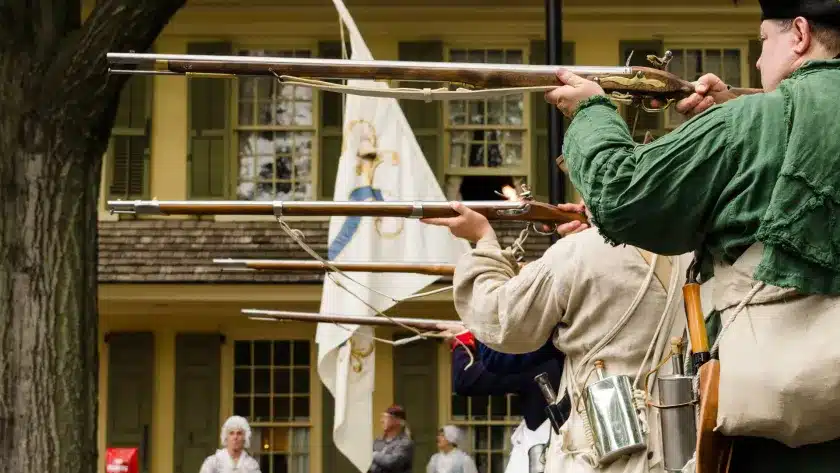
Re-enactors raise their weapons in front of the Indian King Tavern.
From January through September 1777, the tavern’s second‑floor meeting room served as the assembly chamber where lawmakers debated wartime issues, revised election and court procedures, and governed amidst military crisis. It was here that the New Jersey Legislature recorded the Declaration of Independence into its official minutes, adopted the state’s Great Seal, and asserted its authority as a new state rather than a British colony. (American Battlefield Trust)
The tavern also hosted the Council of Safety, a wartime body tasked with investigating suspected Loyalists and enforcing wartime policies. Some accounts suggest the tavern’s cellar or the guard house across the street was used for detaining those accused of aiding the British cause. (American Battlefield Trust)
These functions show how deeply embedded taverns were in political life—not just as places of idle talk, but as centers of governance and enforcement during tumultuous times.
Taverns as Mobilization and Communication Centers
Beyond the Indian King Tavern, South Jersey’s network of taverns was woven into the fabric of daily Revolutionary life. Taverns along King’s Highway and other routes provided meeting places where local militia officers gathered to organize, share intelligence, and recruit volunteers. These inns were communal hubs where travelers carrying news from distant regions could inform locals about troop movements or political developments. (Gloucester County Historical Society)
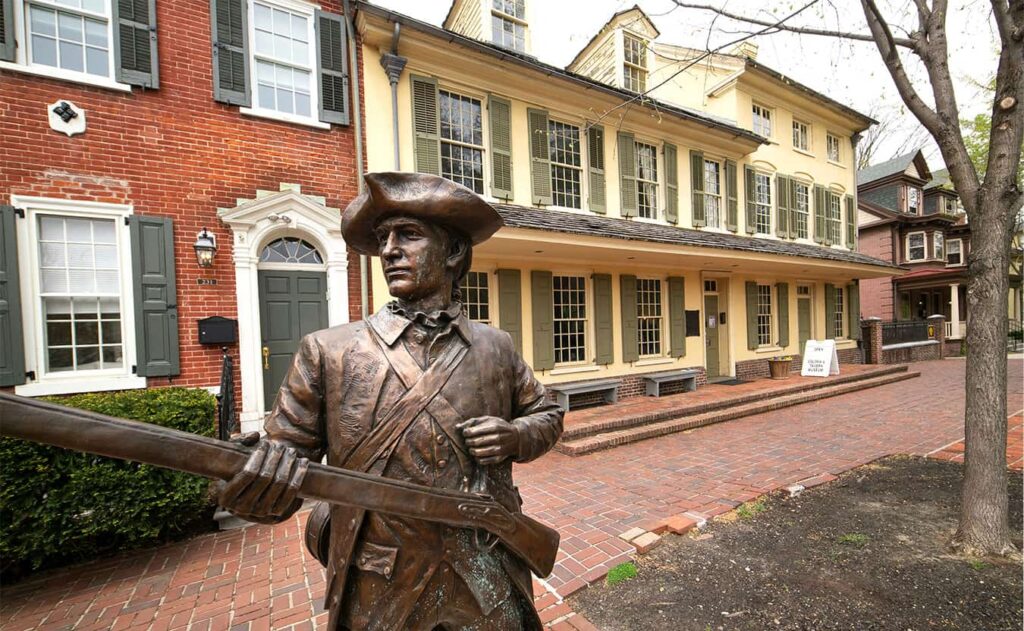
Photos: Hoag Levins
While specific documentation of every South Jersey tavern’s role in the Revolution isn’t always available, the broader pattern across the colonies is clear: taverns were hubs of public discourse and logistical coordination. They helped knit together local Patriot networks at a time when formal infrastructure was limited and uncertainty was constant. (National Park Service)
More Than Politics: Social Life and Shared Identity
Taverns were more than logistical centers—they were social crucibles. Men (and sometimes women) from all walks of life gathered for meals, music, debates, and lodging. In an era without mass media, these gatherings were the primary means of spreading news and shaping public opinion. Conversations about grievances, rights, and British policy didn’t happen in lecture halls—they happened by the hearth, over ale, around tavern tables. These informal exchanges helped solidify a shared Patriot identity among colonists and steeled communities for the long struggle ahead. (National Park Service)
Preserving the Legacy Today
Today, the Indian King Tavern Museum stands as a testament to this revolutionary crossroads of politics and everyday life. Acquired by the State of New Jersey in 1903 as its first historic site, the building has been restored and interpreted to show visitors how taverns looked and felt during the era of American independence. (Crossroads of the American Revolution)
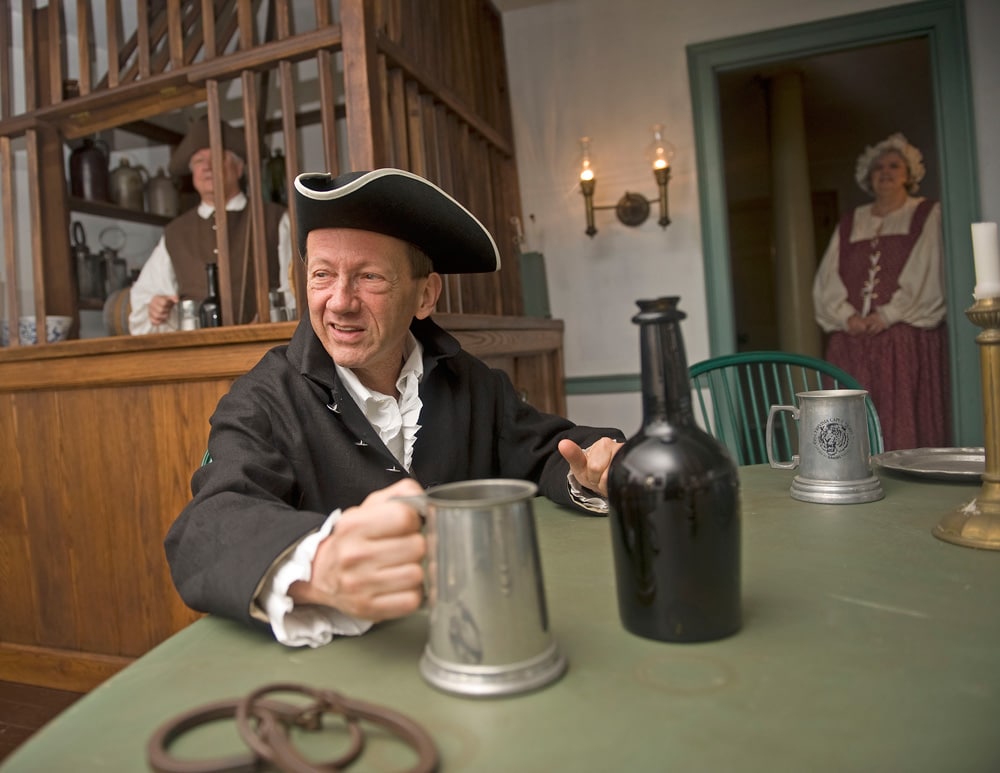
revolutionarynj
Walking through its rooms, you can almost feel the echoes of earnest debate, the murmur of assembly discussions, and the clink of mugs over plans for a nation yet unformed. In this sense, South Jersey’s taverns remind us that the Revolution was as much a community‑driven movement as a military one—an era shaped by ordinary spaces that became extraordinary venues for ideas, unity, and self‑determination.
Selected Sources & Further Reading
- American Battlefield Trust – Indian King Tavern history and role in Revolutionary government. (American Battlefield Trust)
- Revolutionary New Jersey site – Indian King Tavern as meeting place and state government hub. (Crossroads of the American Revolution)
- National Park Service overview of taverns in the Revolutionary era. (National Park Service)
Local Haddonfield historical accounts on tavern functions and wartime life. (southjersey.media)