
Crossing the Delaware and the Road to Camden: How Cooper’s Ferry Shaped the British Campaign
During the American Revolutionary War, one of South New Jersey’s most historically significant but often overlooked places was Cooper’s Ferry on the Camden waterfront. Far more than just a crossing point, this ferry landing played a strategic role in the British Army’s movements and logistics during the Philadelphia Campaign of 1777–1778 and its legacy still echoes through Camden’s streets today.
What Was Cooper’s Ferry?
Long before bridges spanned the Delaware River, colonists relied on ferries to move people, livestock, and supplies between New Jersey and Pennsylvania. One of the oldest of these was established by the Cooper family in the late 1600s and became known simply as Cooper’s Ferry. By the mid‑18th century, it was an important transportation hub near what is now the Camden Waterfront. (Camden County, NJ)
The British Occupy Philadelphia and Use Cooper’s Ferry
After winning a decisive victory at the Battle of Brandywine in September 1777, British forces under General Sir William Howe occupied Philadelphia, the American capital, that same month. (The City of Camden) While the British held the city, access to supplies and movement of troops was critical. The Delaware River was the main artery for this activity and Cooper’s Ferry was one of the key points where troops and equipment could cross from Philadelphia into New Jersey. (Camden County, NJ)
Historical records show that British regiments, including the 42nd Regiment and the Queen’s Rangers, crossed from Philadelphia to Cooper’s Ferry in February 1778 with artillery and soldiers as part of duties ranging from foraging to strategic positioning. (amrevmuseumsnj.com)
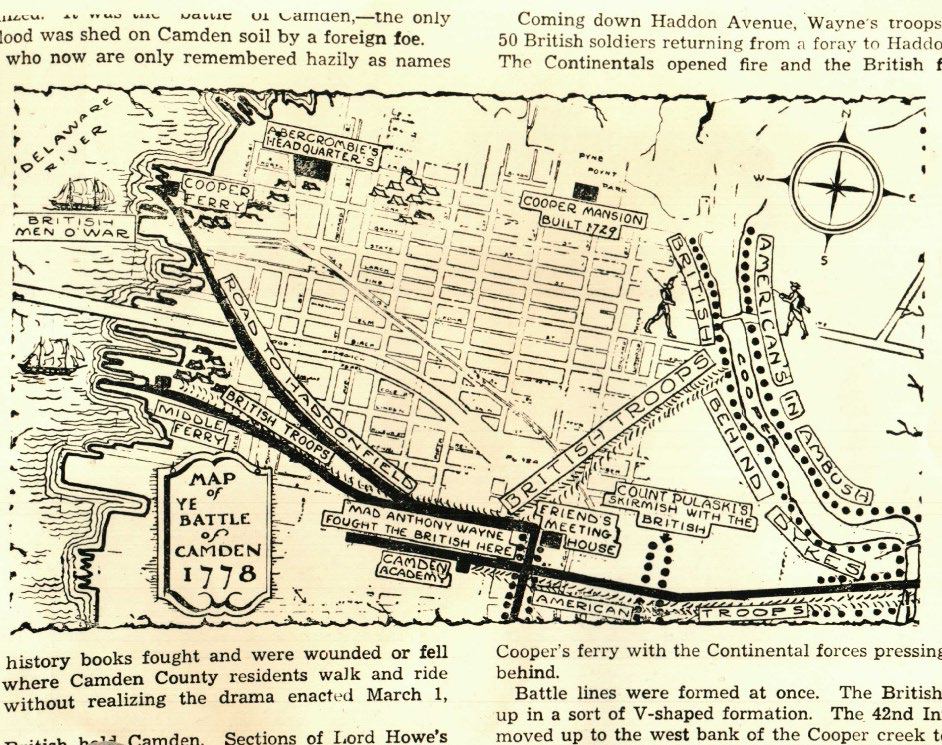
Skirmishes and Local Resistance
The British presence in the South Jersey area didn’t go uncontested. Continental militia and officers like General Anthony Wayne and Count Casimir Pulaski engaged the British near Cooper’s Ferry. Skirmishes occurred as American forces attempted to disrupt British movements and draw them away from strong positions under naval support. (amrevmuseumsnj.com)
A Rallying Point for British Retreat
By mid‑1778, the wider strategic situation had changed. With France allied to the American cause after Saratoga, British commanders decided to abandon Philadelphia and concentrate forces in New York. In June 1778, Cooper’s Ferry became a staging point for evacuating troops, artillery, wagons, and supplies as part of the British withdrawal. (cchsnj.org) This shift directly connected the Camden waterfront to one of the pivotal turning points in the Philadelphia Campaign.
Local Civilian Impact
The wartime activity transformed the region around Cooper’s Ferry. The Benjamin Cooper House, originally built in 1734 near the ferry landing, was commandeered as a British headquarters during the occupation. (Wikipedia) The constant movement of troops and artillery through the area affected civilians, and remnants of these events can still be traced in local stories and surviving architecture.
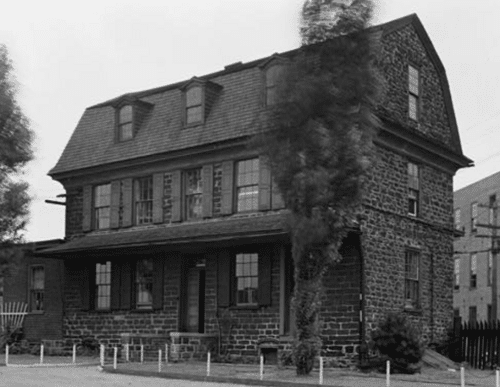
Benjamin Cooper House
Why This Matters
When we think of Revolutionary War history in New Jersey, names like Trenton or Princeton often come to mind. But Cooper’s Ferry was part of the fabric that made the war possible, a crucial logistics point that connected armies, rivers, towns, and the fate of campaigns. It reminds us that history isn’t just shaped by dramatic battles, but also by the movements of men and material across the landscape.
Sources
Primary and Local Historical Research
- Camden History and Revolutionary War context (occupation and troop movements at Cooper’s Ferry). (Camden History)
- British Army operations and crossings at Cooper’s Ferry, including use in early 1778 movements. (amrevmuseumsnj.com)
- British evacuation logistics using Cooper’s Ferry in June 1778. (cchsnj.org)
Benjamin Cooper House served as British command post during occupation. (Wikipedia)