
The Young Marquis and the Skirmish That Echoed Across a Revolution
How a French Nobleman First Led American Troops in Gloucester Town, New Jersey
In the late autumn of 1777, the course of the American Revolution briefly turned toward the winding roads and marshy banks of South Jersey. Here, at a modest skirmish now known as the Battle of Gloucester, a young French aristocrat named Marie‑Joseph‑Paul‑Yves‑Roch‑Gilbert du Motier, Marquis de Lafayette took his first independent command on American soil — earning respect from General George Washington, the Continental Congress, and future historians alike. (Wikipedia)
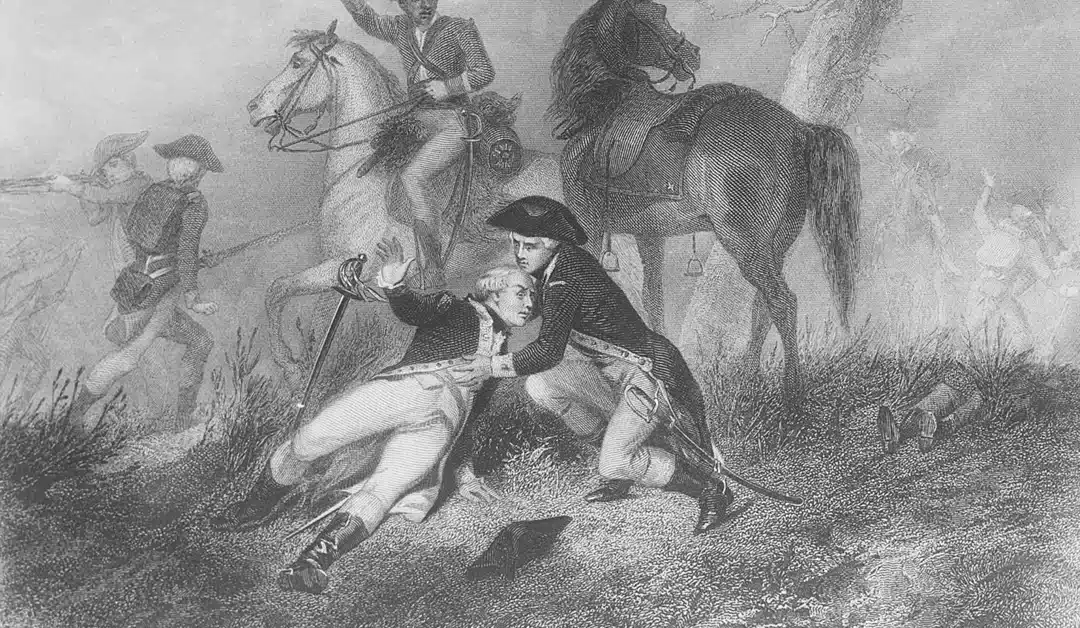
This illustration depicts Lafayette after he was wounded at the Battle of Brandywine. Image Source: Lafayette Digital Repository.
From French Court to Colonial Cause
Lafayette arrived in America in 1777, just 19 years old, driven by both idealism and a thirst for glory. Despite his youth and lack of battlefield command experience, Congress appointed him a major general in the Continental Army, and he quickly became one of Washington’s most trusted aides. (Encyclopedia Britannica)
After fighting bravely — and being wounded — at the Battle of Brandywine in September 1777, Lafayette remained determined to prove himself a capable leader. (Wikipedia)
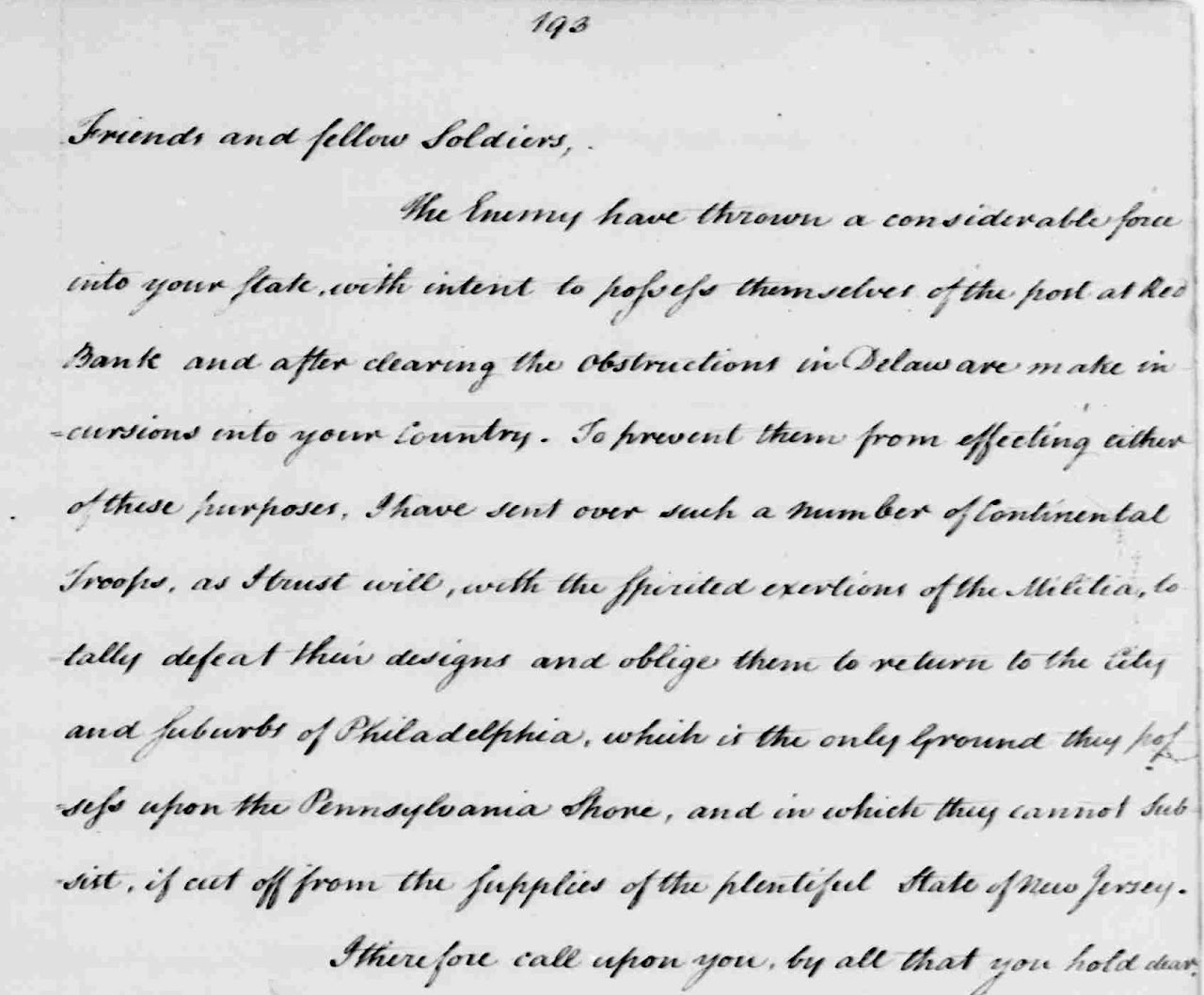
George Washington calls South Jersey to arms.
The Stage Is Set: Gloucester Town, November 1777
In November 1777, British forces under Lord Cornwallis camped near the Delaware River at Gloucester Town (today’s Gloucester City, New Jersey) following their capture of Philadelphia. Cornwallis’ troops and Hessian allies were gathering provisions and preparing to winter across the river. (gloucestercityhistoricalsociety.org)
To check the enemy’s strength and intentions, Washington ordered Major General Lafayette — now still in his teens — to lead a reconnaissance mission with a modest force of about 350 soldiers. (Wikipedia)
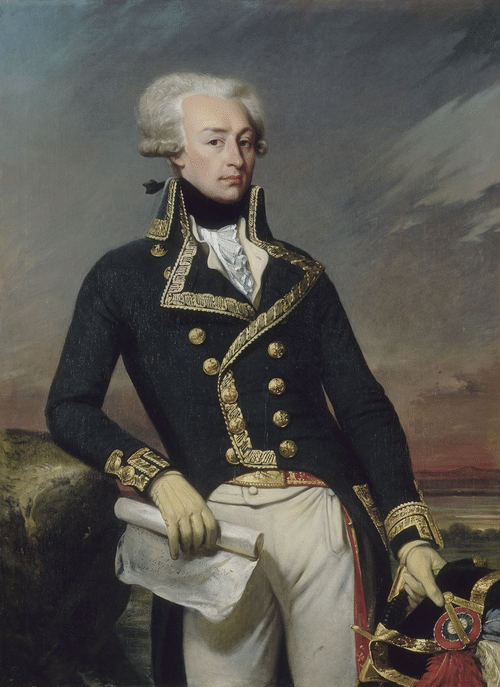
Lafayette as a lieutenant general in 1791, by Joseph-Désiré Court (1834)
A Skirmish, Not a Siege — But a Moment in History
On November 25, 1777, Lafayette marched toward the British position south down the King’s Highway. His orders were simple: scout enemy numbers and disrupt their operations if possible. (Wikipedia)
Instead of mere observation, Lafayette seized the initiative. With a mix of Continental soldiers, New Jersey militia, and a detachment of Morgan’s Riflemen, he attacked a Hessian picket guarding a bridge near present‑day Gloucester City. The Hessian jägers — elite light infantry — were taken by surprise and forced into a disorganized retreat. (American History Central)
Casualty figures from the skirmish reflect its intensity despite its small scale: the Americans suffered few losses, while the Hessians incurred significantly higher casualties and prisoners taken. (American History Central)
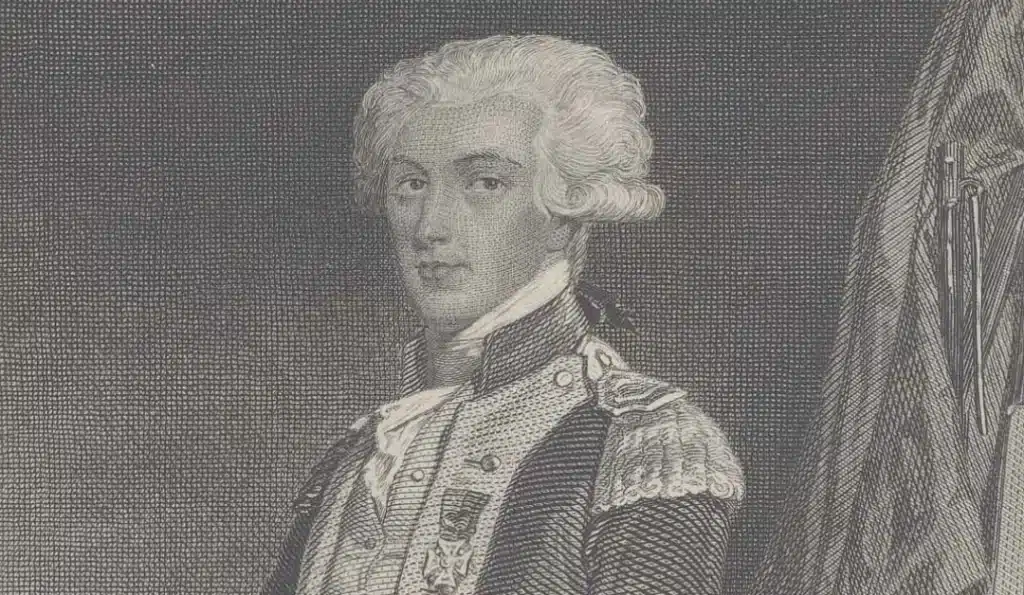
Marquis de Lafayette. Image Source: Tennessee Virtual Archive.
Why This Matters
Though comparatively minor in military scale, the skirmish at Gloucester was pivotal in Lafayette’s career. It was the first time he led American forces on his own — and he succeeded with boldness and tactical savvy. News of his performance bolstered his reputation with Washington and was a key factor in Congress affirming his leadership and placing larger forces under his command. (Wikipedia)
In the annals of the Revolution, this South Jersey engagement reminds us that history isn’t made only in grand battles, but also in smaller, decisive moments where leadership and courage shine through.
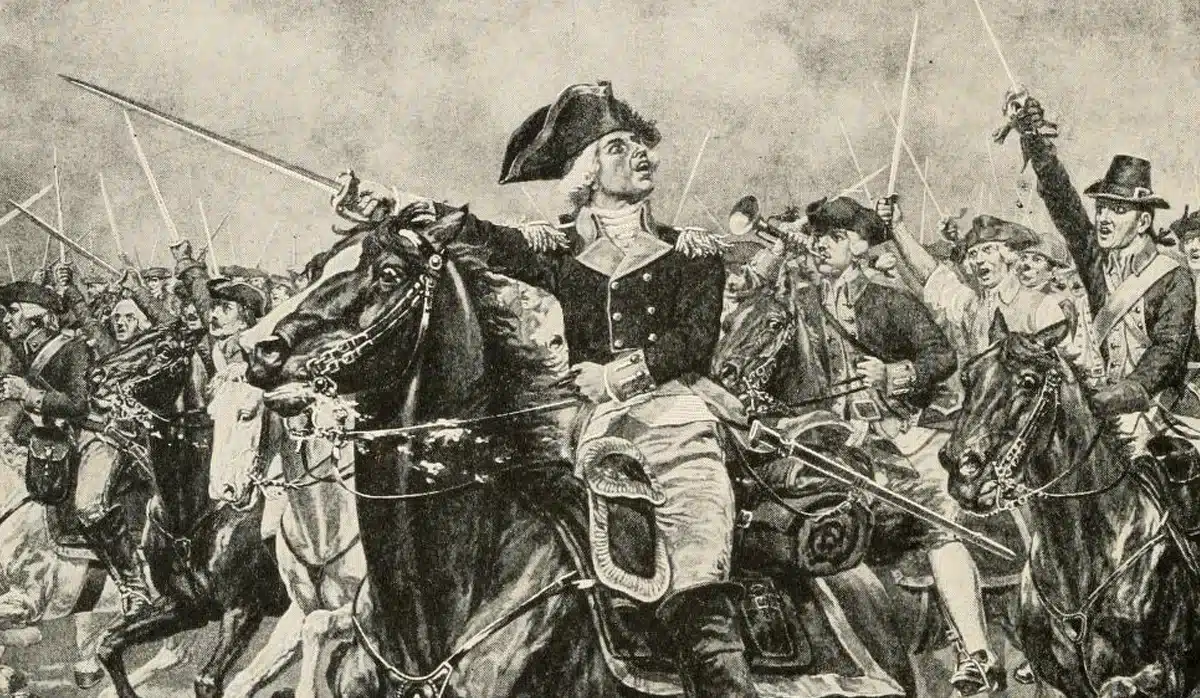
This illustration depicts Lafayette leading a cavalry charge at the Battle of Monmouth. Image Source: The True Story of Lafayette by Elbridge Streeter Brooks, 1899, Archive.org.
Sources (Verifiable & Respectful)
- Battle of Gloucester (1777) — Wikipedia historical summary of the skirmish and Lafayette’s command. (Wikipedia)
- Marquis de Lafayette — Britannica overview of Lafayette’s role in the American Revolution. (Encyclopedia Britannica)
- AmericanHistoryCentral entry on Lafayette’s Gloucester action. (American History Central)
Gloucester City Historical Society details on the local context and movements. (gloucestercityhistoricalsociety.org)